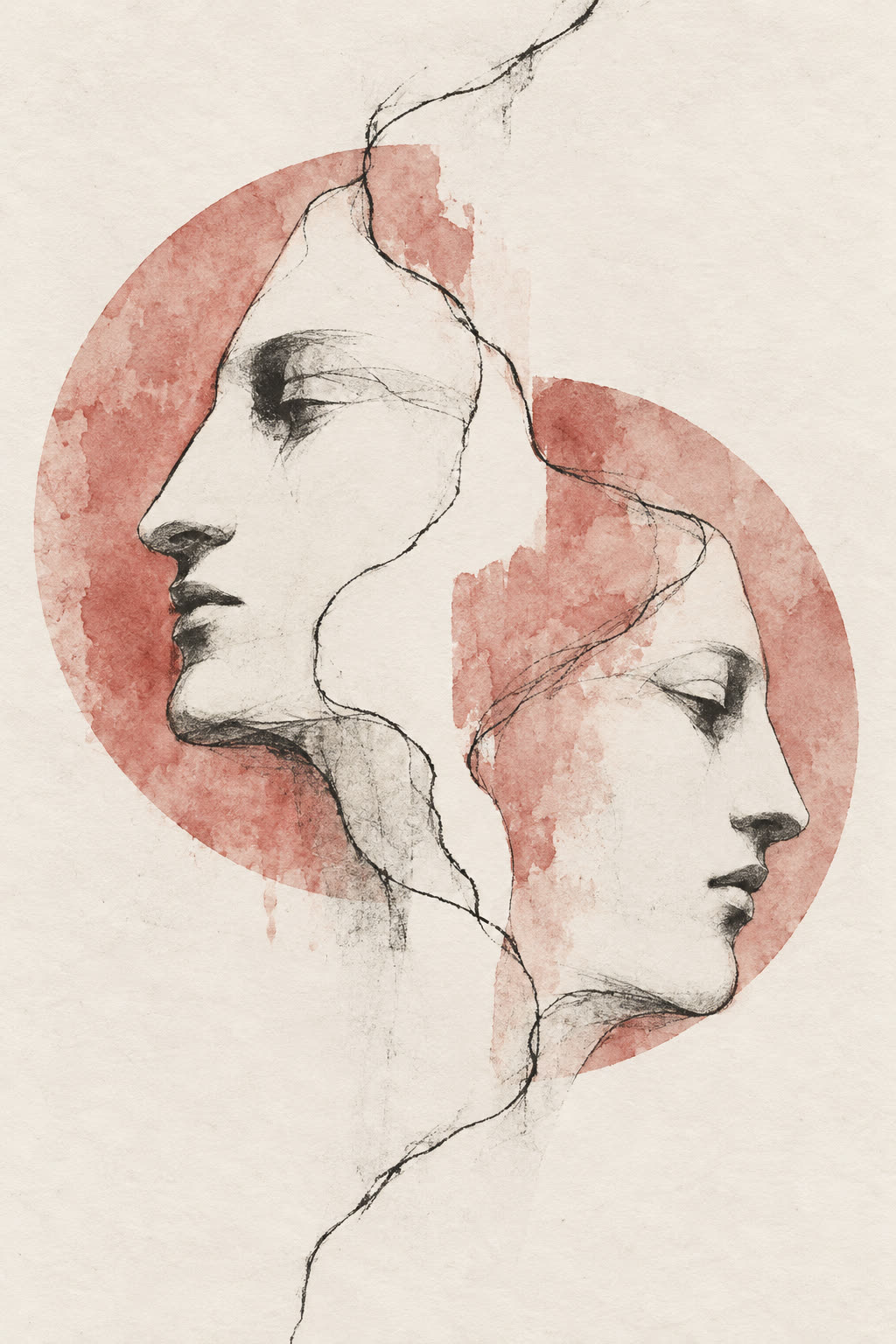
Beyond Good and Evil
Friedrich Nietzsche
01
Episode 1: Philosophy's Hidden Instincts
In Chapter One of Beyond Good and Evil, Nietzsche argues that philosophers have never questioned whether truth is actually worth more than illusion, and that their "pure logic" — from Kant's categorical imperative to Descartes' cogito — is really instinct and temperament dressed up as neutral reasoning. The chapter's throughline is that the mind's most confident-seeming operations (truth-seeking, logical proof, the thinking "I") are downstream of forces they claim to be above.
02
Episode 2: Masks, Errors, and Free Spirits
This episode explores three linked ideas from Nietzsche's chapter "The Free Spirit": that martyrdom for truth corrupts the thinker rather than proving the idea, that the mind survives through useful simplification and error rather than pure truth-seeking, and that an action's unintentional roots reveal more than its stated intention. The common thread is Nietzsche's suspicion of surfaces - masks, declared truths, and stated reasons - versus the hidden instincts actually driving them.
03
Episode 3: Faith as Power Struggle
This episode examines Nietzsche's treatment of religion in Beyond Good and Evil as a study of power rather than truth—exploring why ascetics unnerve the powerful, how he frames faith as an ongoing war against one's own reason, and his controversial claim that religion, left unchecked, shapes humanity by protecting the weak rather than elevating the strong.
Remaining episodes coming soon!